My roles
Co-lead
Visuals Manager
Team
Isabelle Tolar
Samantha Siefert
Hayleigh Kennelly
Tools
Figma
Otter.ai
Adobe Illustrator
Duration
10 weeks
रूपरेषा
Overview
1 in 5 pets are returned after adoption at PetSmart, dead or alive. This equates to roughly 100,000 pets returned every year.
We set out to solve this adoption problem through PetSmart Charities, the non-profit wing of PetSmart responsible for partnering with local shelters and volunteer organizations.
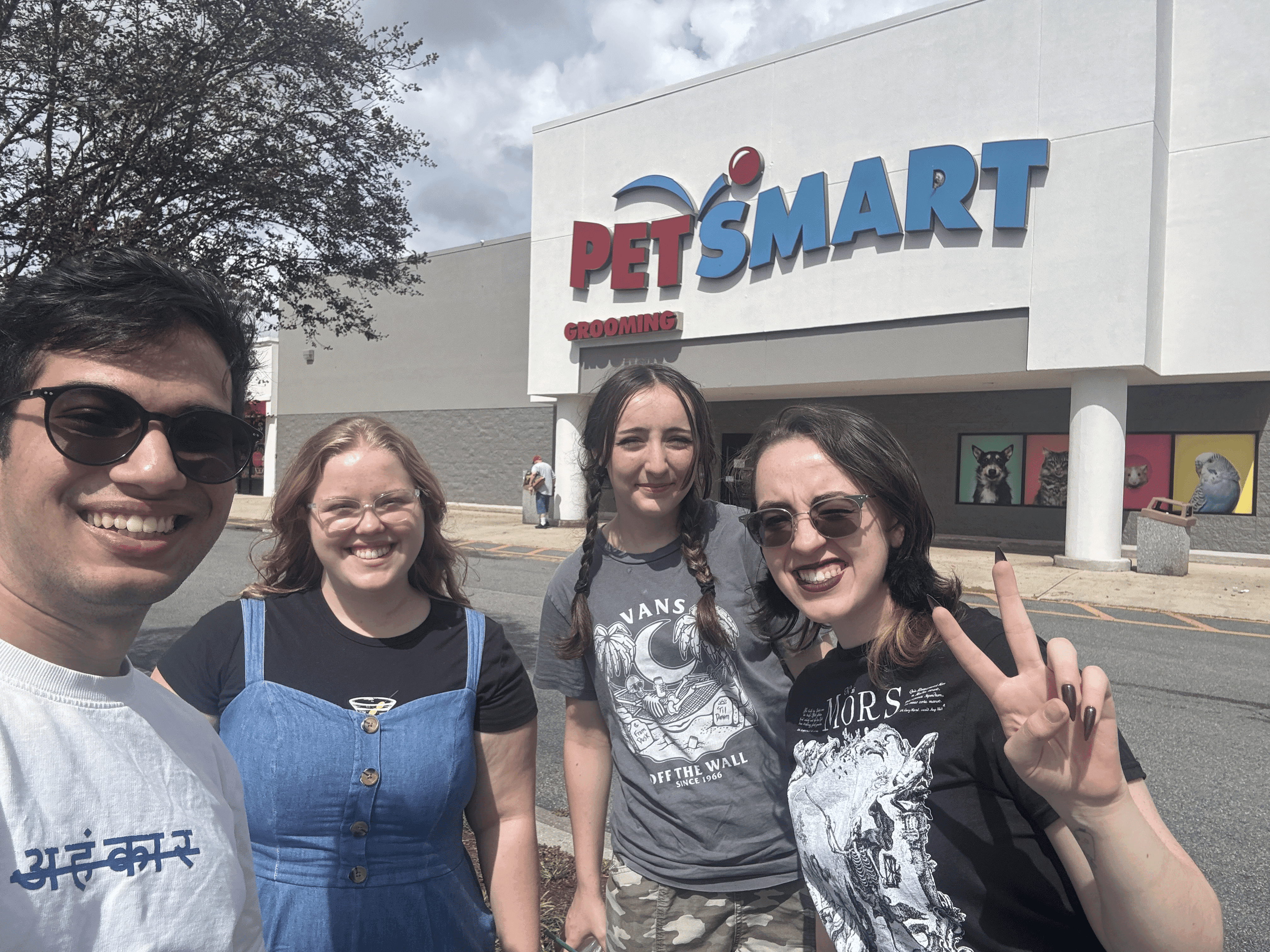

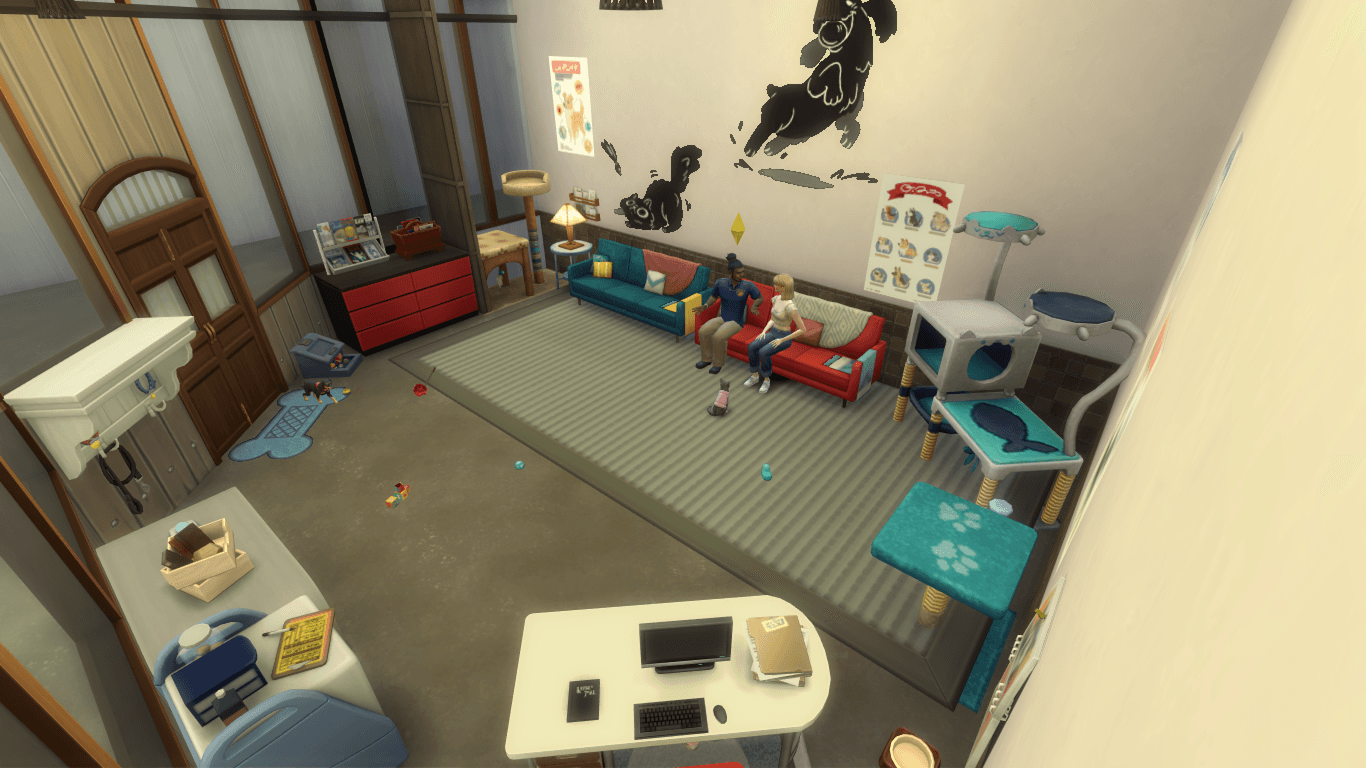
My role
Co-lead: I designed organization systems that allowed my team to work better asynchronously.
Visuals Manager: I facilitated with developing beautiful and comprehensive visuals for our team deliverables.
ओझरतं
Sneak Peak
Service Prototypes
Co-Creation Workshop Montage
Reworking the pet adoption process
परिस्थिती समझणे
Understanding context
PetSmart Charities
Here are some quick statistics about PetSmart Charities:
$600 million
In donations provided to local shelters
11 million
Animal lives saved since 1994
400,000
Animals find a home every year
The Pet Adoption Space
During our desk research, we found an alarming statistic about the pet adoption process at PetSmart.
100,000
Pets returned after adoption every year at PetSmart, dead or alive
We also observed a multitude of other issues that arose from the return problem:
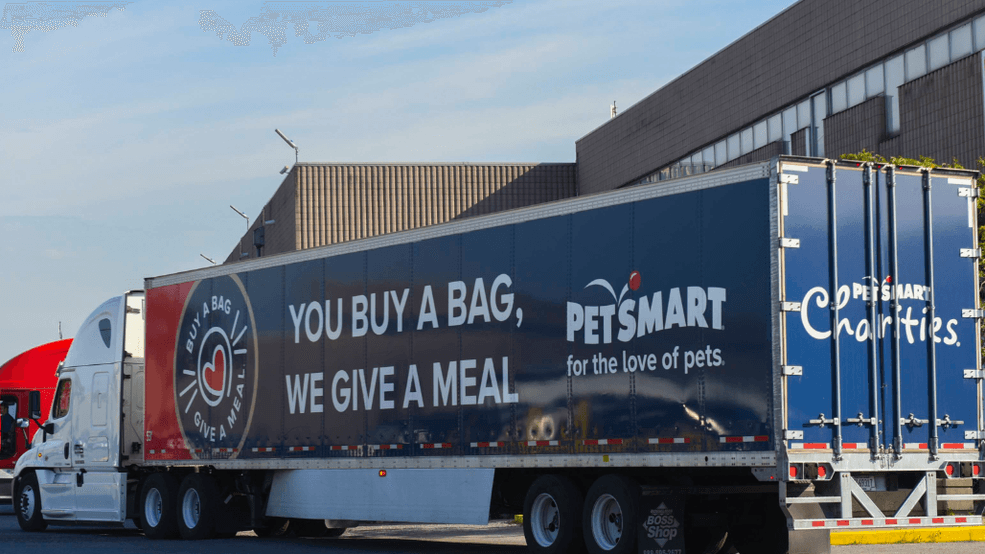
Added Complications
All stakeholders involved in the process have more steps after return

Customer Hesitation
New adopters are more afraid to learn or get into pet adoption
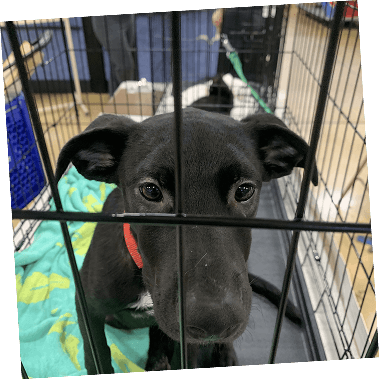
Animal Stress
Animals face additional stress from switching environments
सध्याची कर्मचर्या
The current process
Before jumping into design solutions, we wanted to understand what the current adoption process at PetSmart looks like. We used several tools to really understand what's going on.
Mental Model

Mental Model created based on 698 data points
Key Insights
Emotion Driven
Decisions taken by customers are driven more by emotion than logic
Human Touch
Experience is heavily determined by staff during adoption
Information Gap
Customers don't retain key information about pet adoption after visits
Current-state Service Blueprint
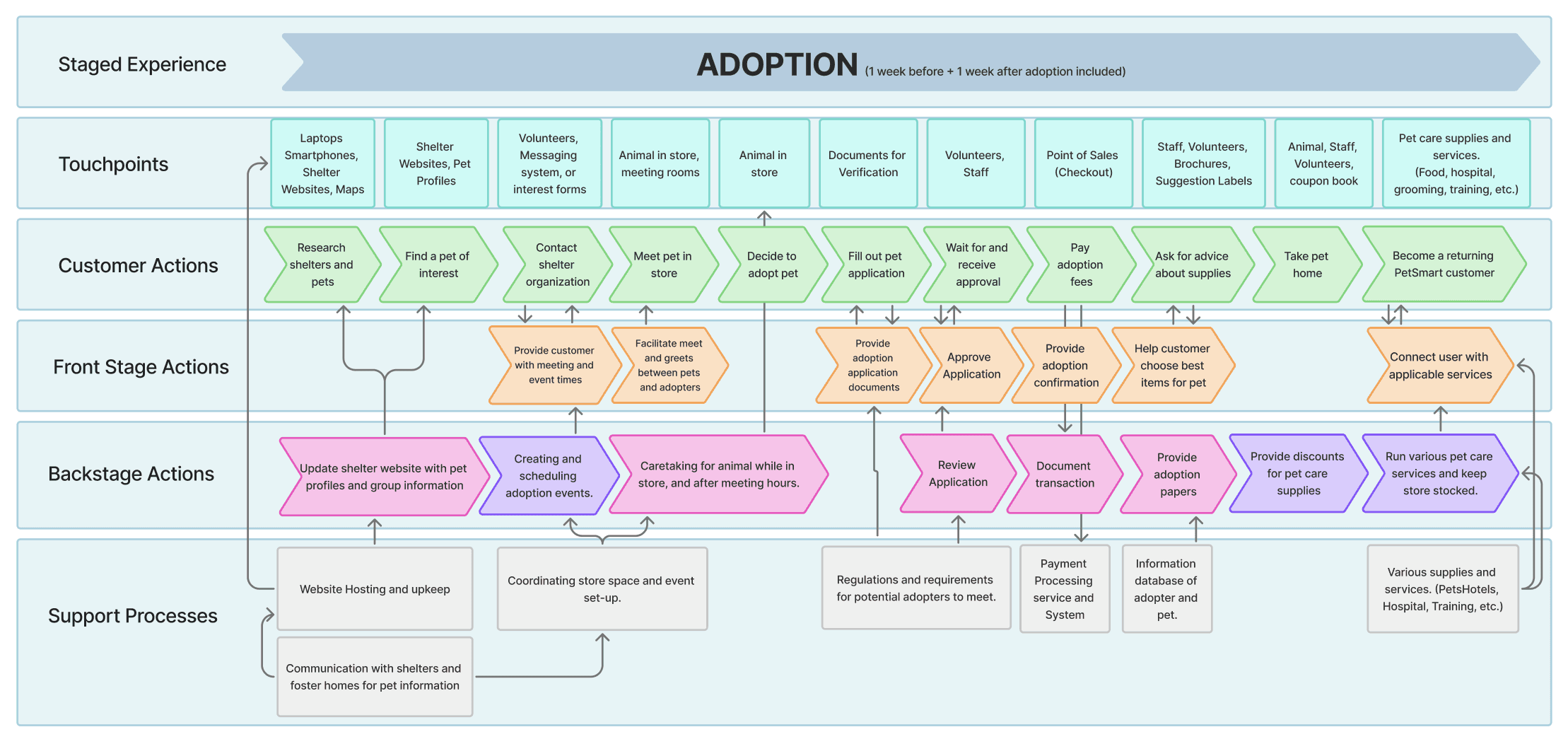
Service Blueprint modeled based on PetSmart store on Abercorn St. & Victory Dr. in Savannah, GA.
Key Insights
Limited Interactions
PetSmart employees aren't as involved in the adoption process.
Volunteer-Driven
Shelter volunteers are driving the current adoption experience.
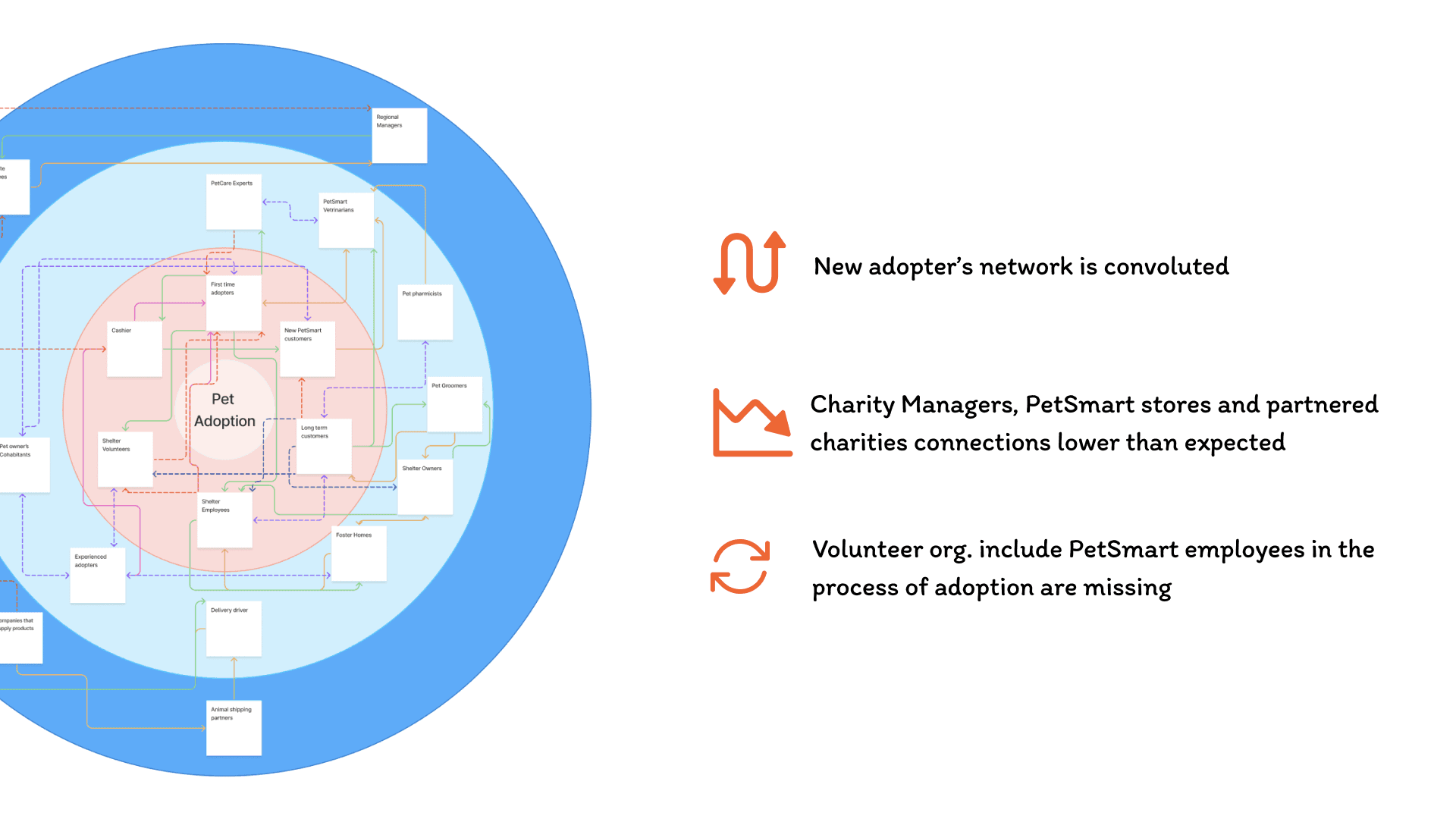
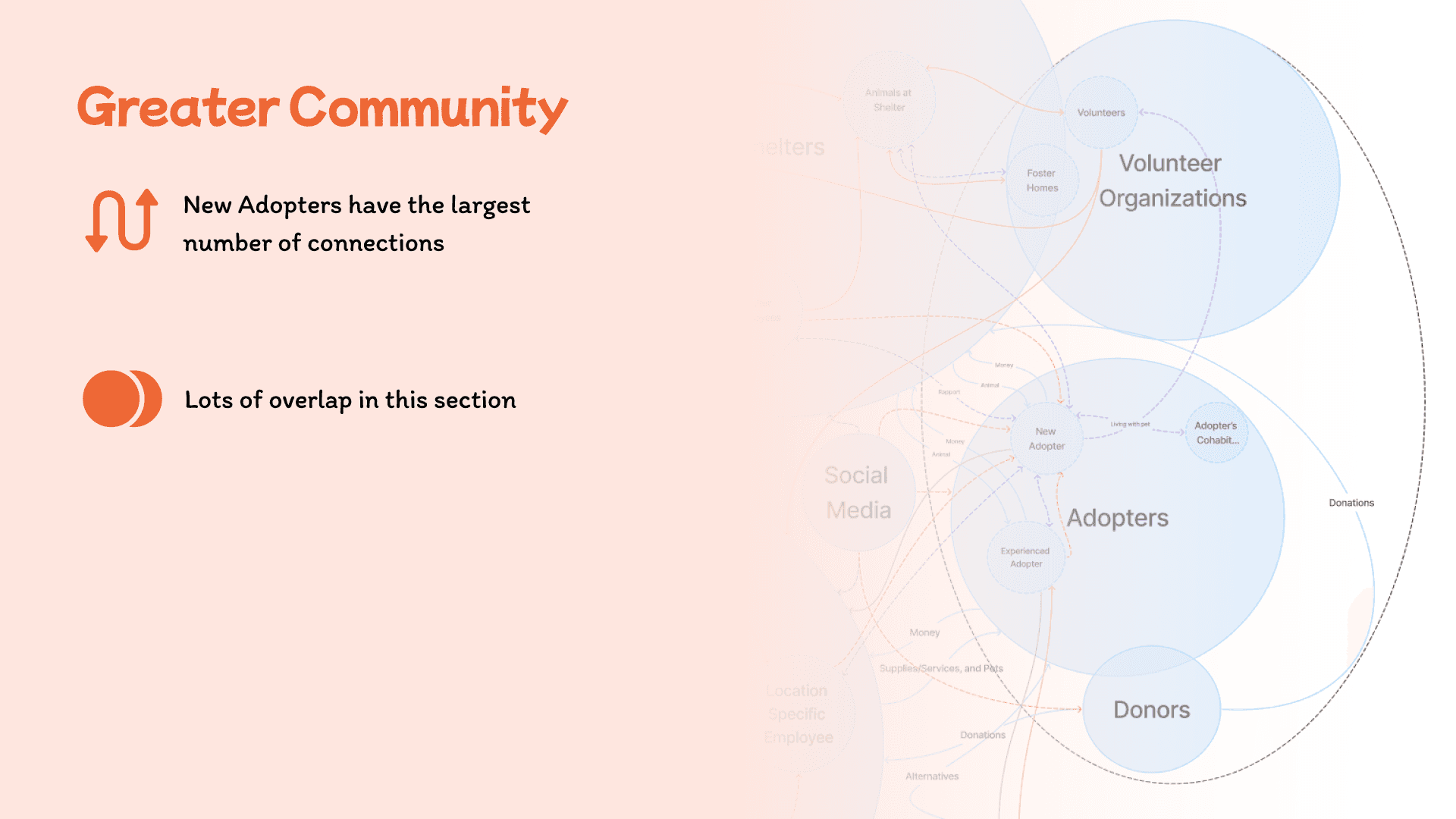
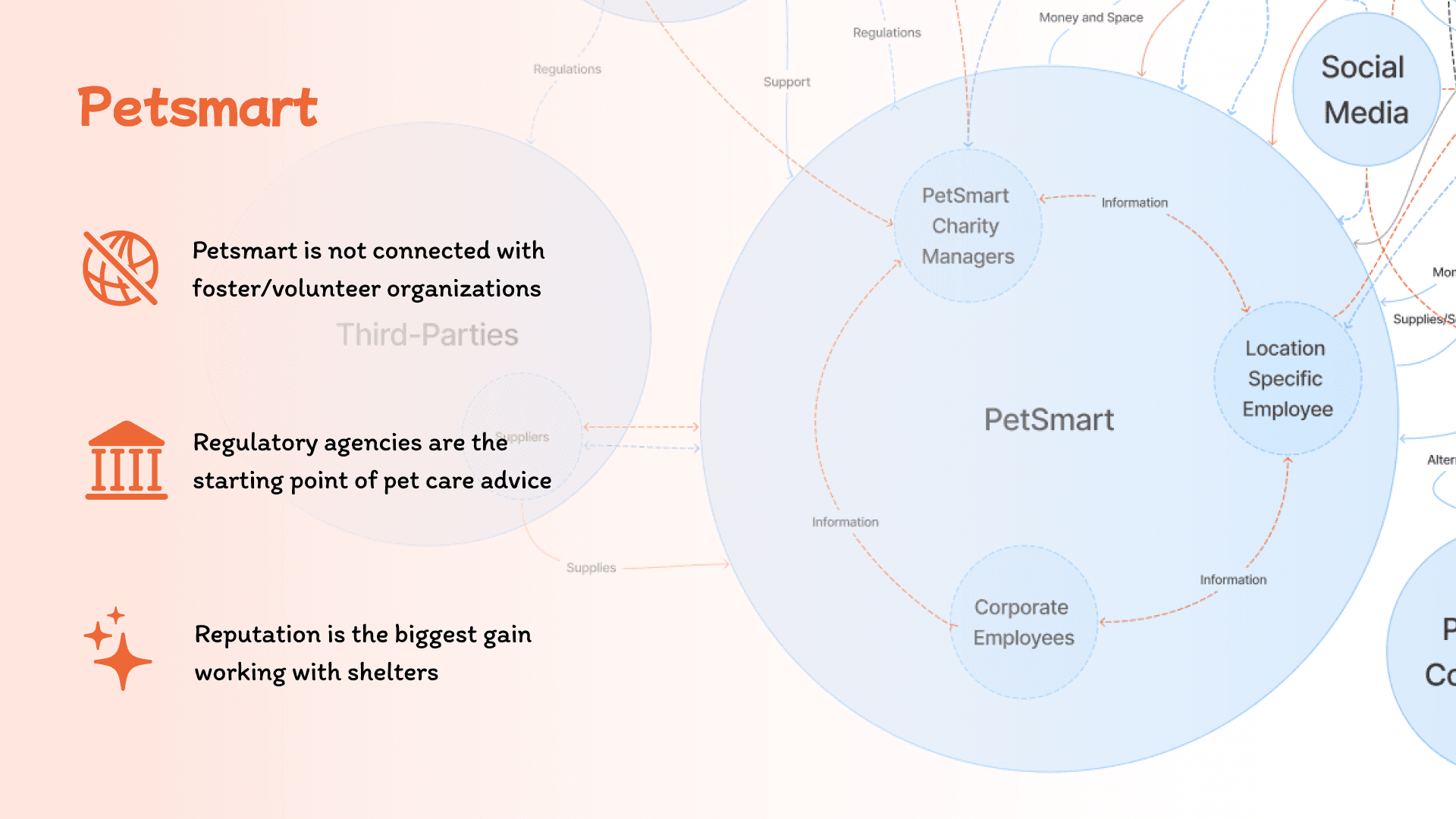
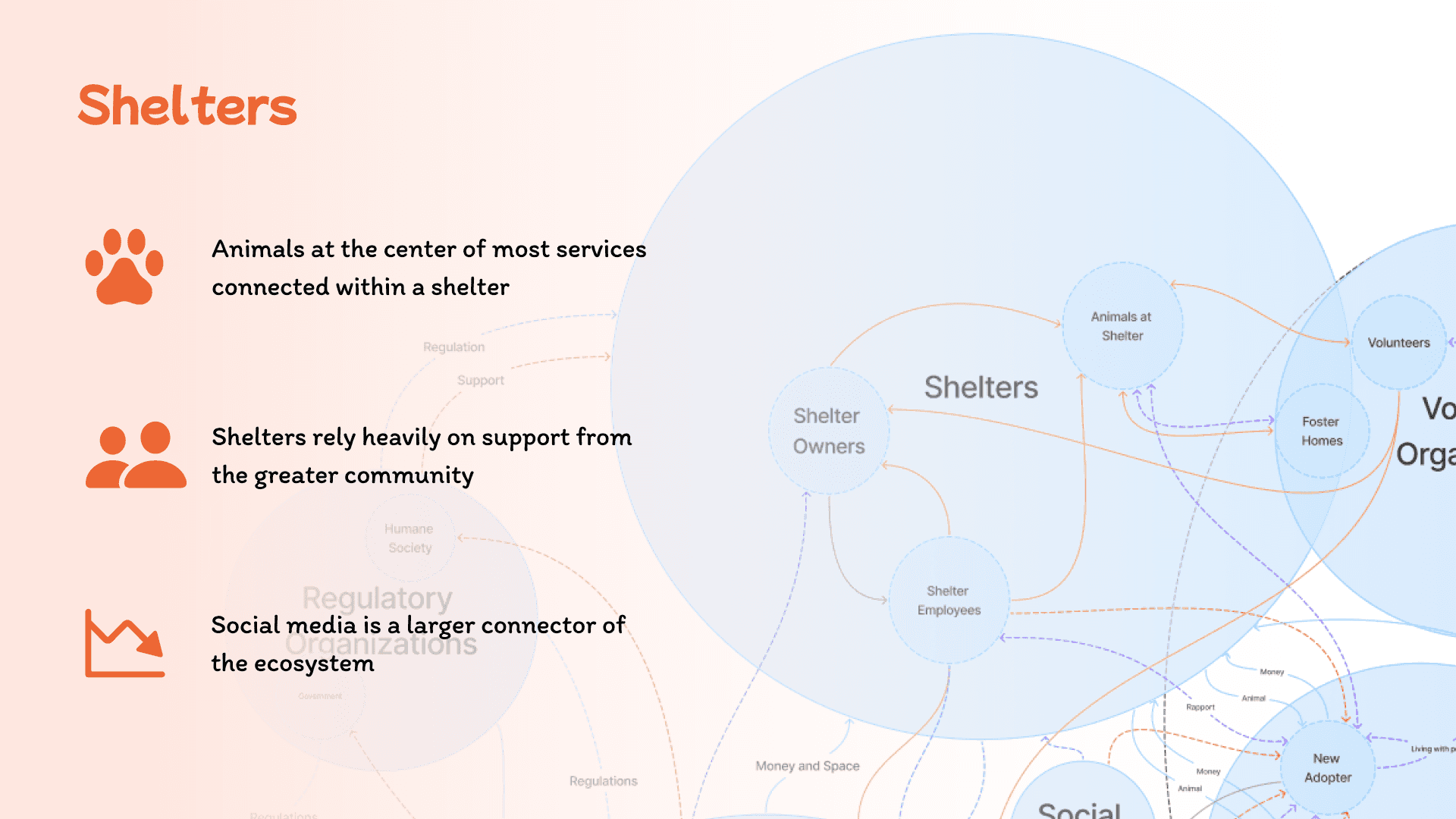
We further investigated into PetSmart's operations by creating system maps. These allowed us to understand how various stakeholders interact with each other and looking for potential innovation opportunities.

*Additionally made Stakeholder network map, which the Resource Network map is an extension of.
Resource Network Map insights
Ecosystem Map insights
एक दिशा मियाळी
Getting a direction
After synthesizing this information, we got a clear direction of what and who we were actually designing for. Here's the personas we kept in mind as we stepped into creating our solutions:

Impulsive but Enthusiastic
Limited information gathered before process, don't know all the unknowns, 'adoption first then learn' mentality

Orderly but Timid
Fully researched about shelter groups, available pets. Have specific information but need reassurance
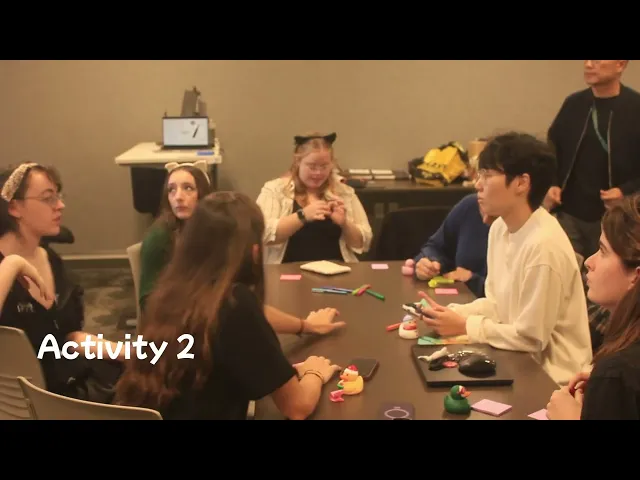
To come up with ideas, we conducted a co-creation workshop with our cohort.
युक्ती कार्यशाळा
Co-Creation Workshop
We presented all of our findings up to this point to our stakeholders, and organized the workshop this way to get the maximum value:
Workshop Structure
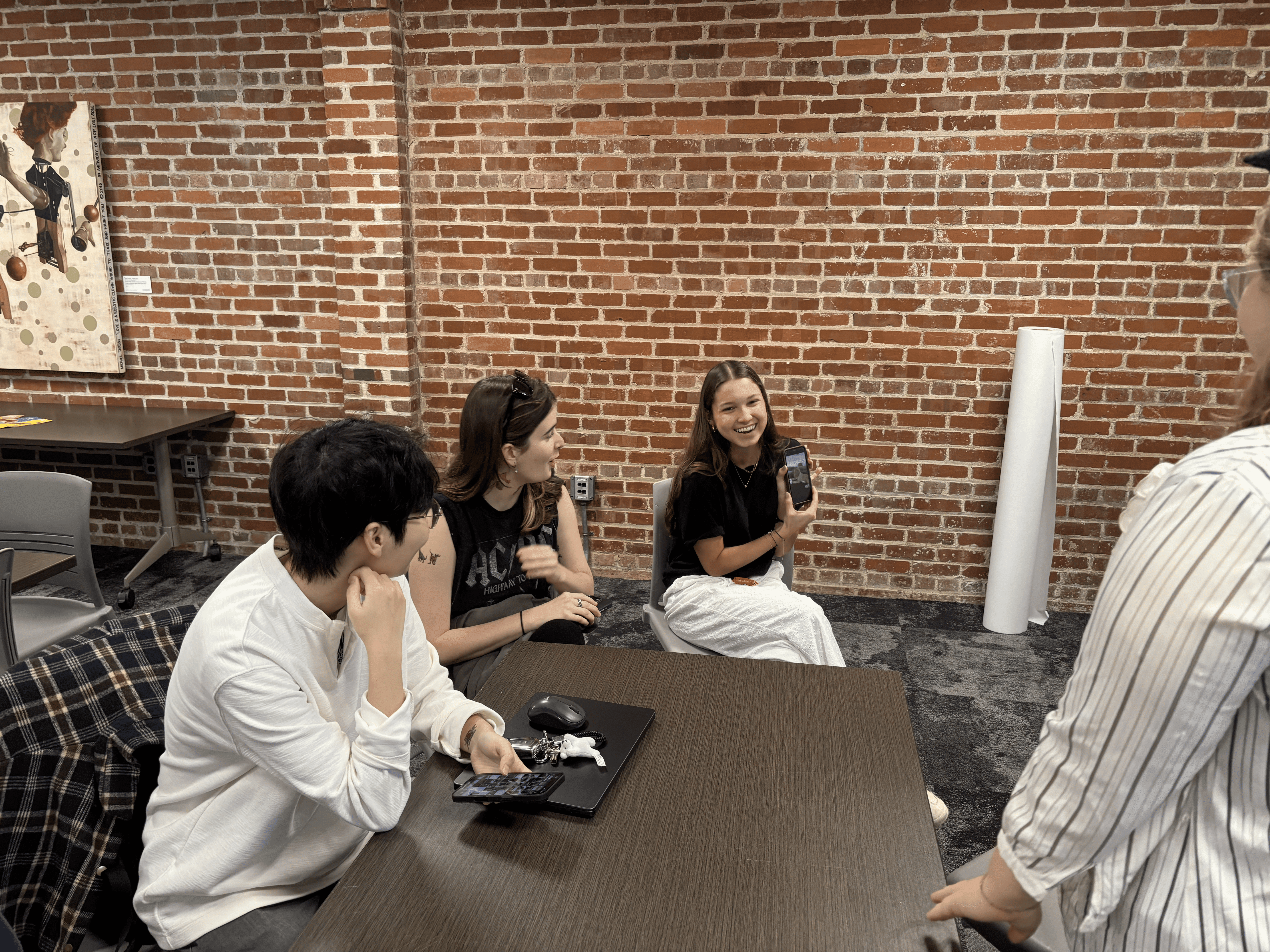
Icebreaker
Introduction with light-hearted activities
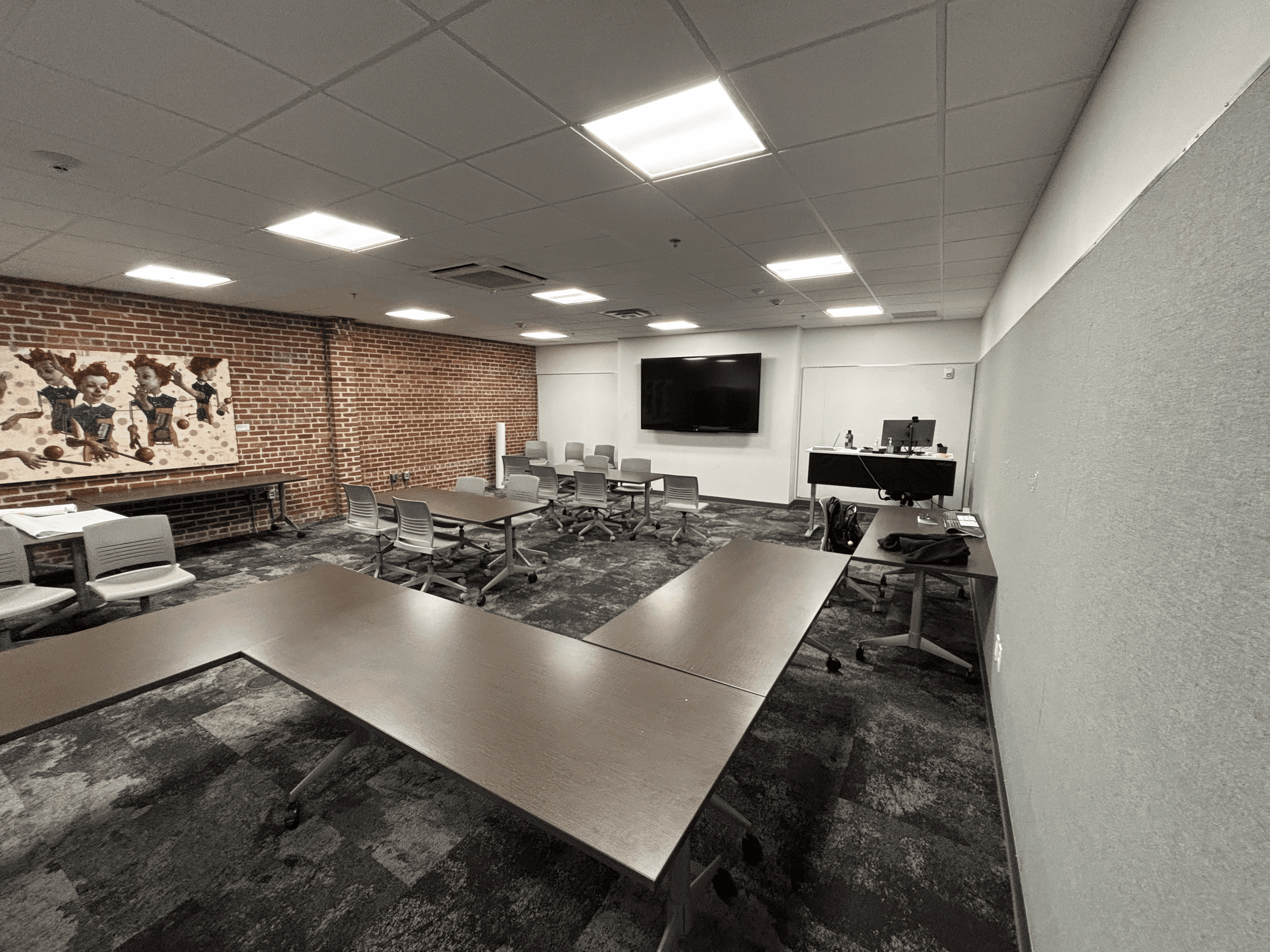
Quick Context
Providing participants potential opportunity areas

Goal & Structure
Communicated workshop goal and structure
Activities
Conducted 3 activities within the workshop
The Activities
Step 1: Roleplay
Roleplaying the current PetSmart adoption experience
Step 2: Reflect
Reflect, brainstorm and brainwrite ideas to improve the current experience
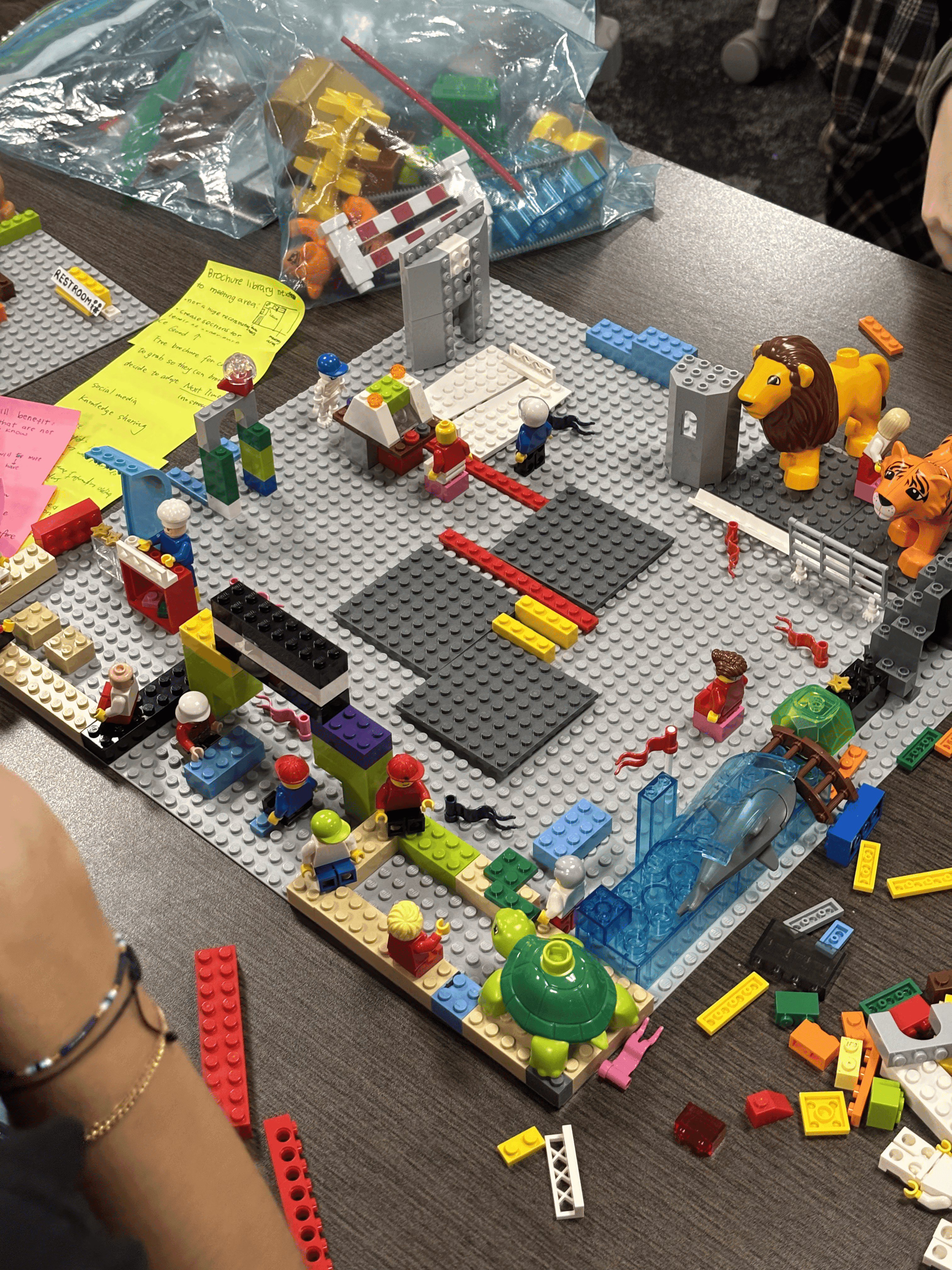
Step 3: 3D Sketch
Test out and iterate ideas with peers using Legos
Ideas Generated
Participants generated two ideas, taking turns to switch and iterate on both of them. Here are the features ideated:
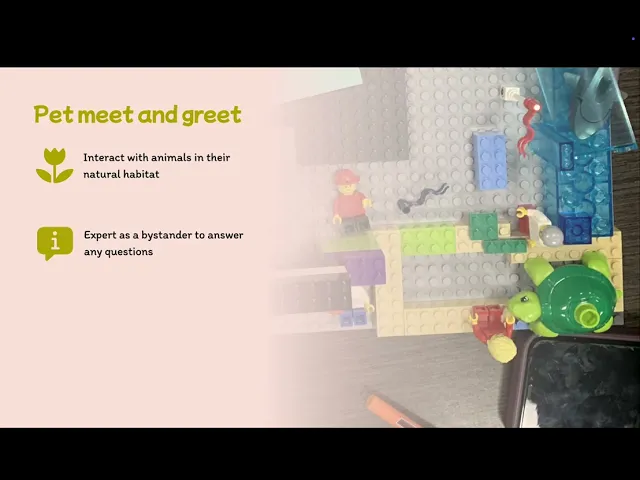
Final models based on 2 rounds of iteration cycles; features were explained and noted down by participants
सेवा बनवणे
Service Prototyping
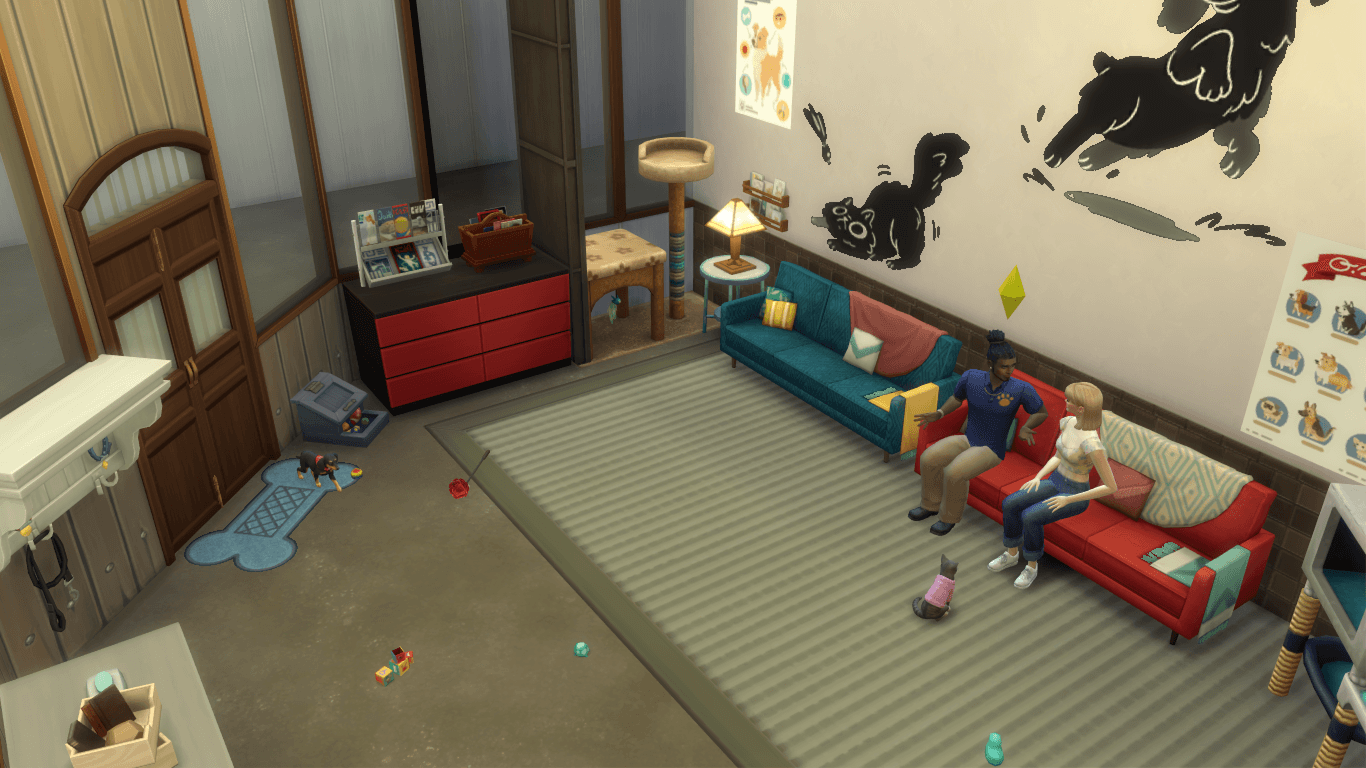
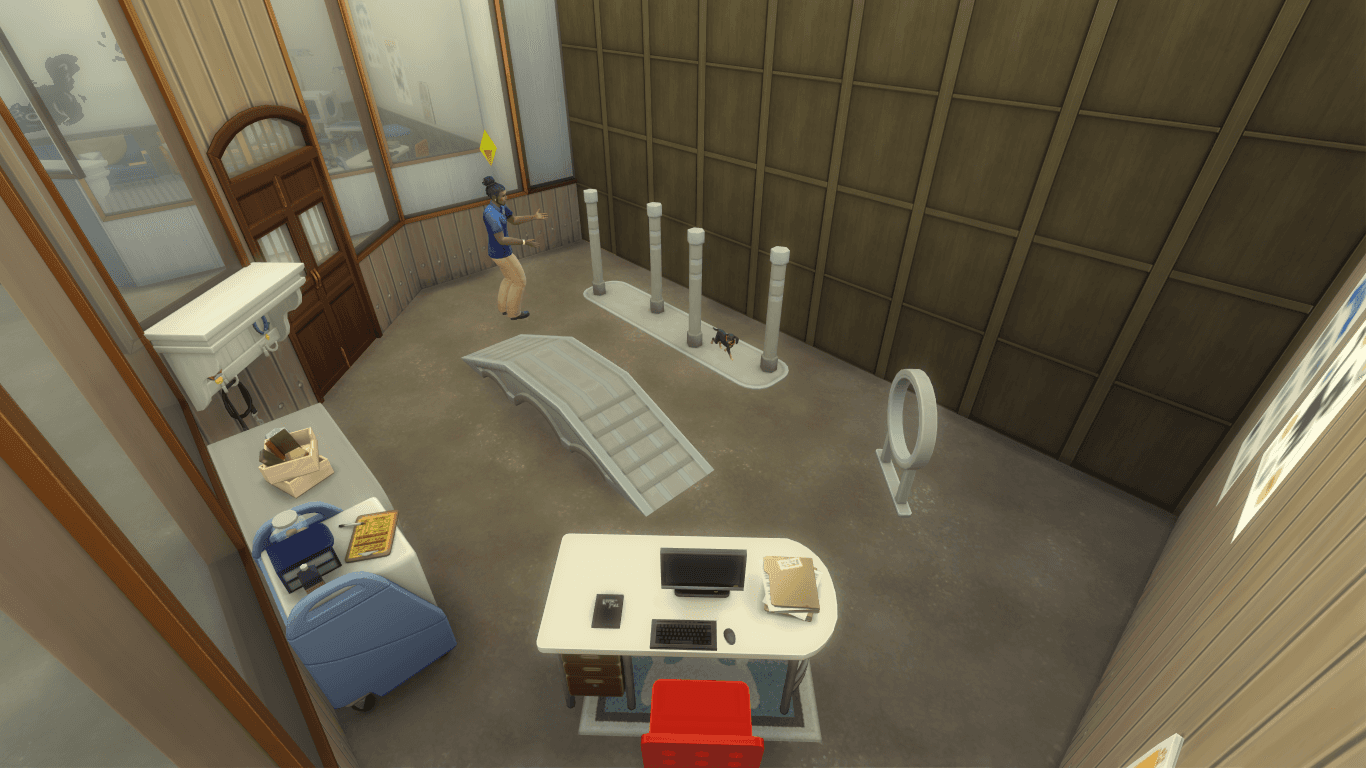
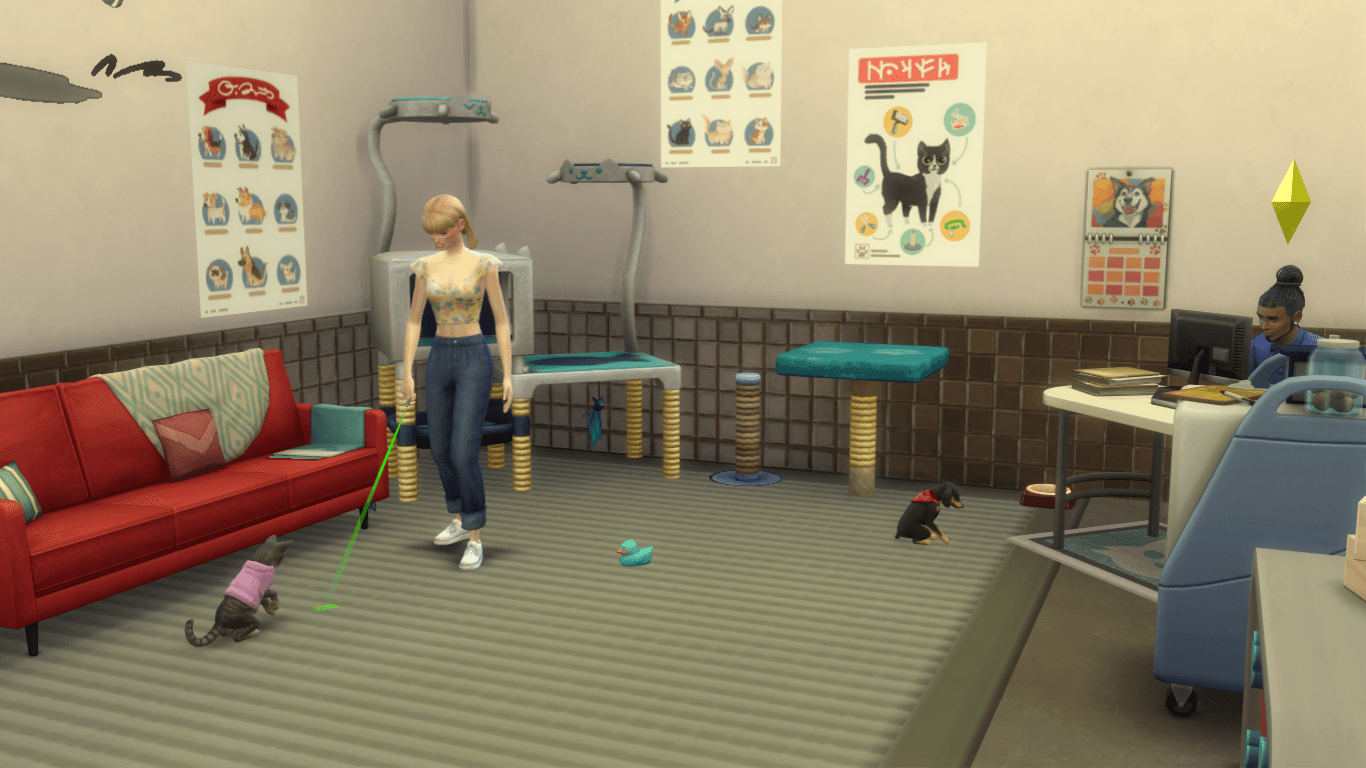
We further refined these ideas by applying our research insights. We created visuals for what the service could look like in PetSmart space as well as a Service Blueprint to implement across different stores.
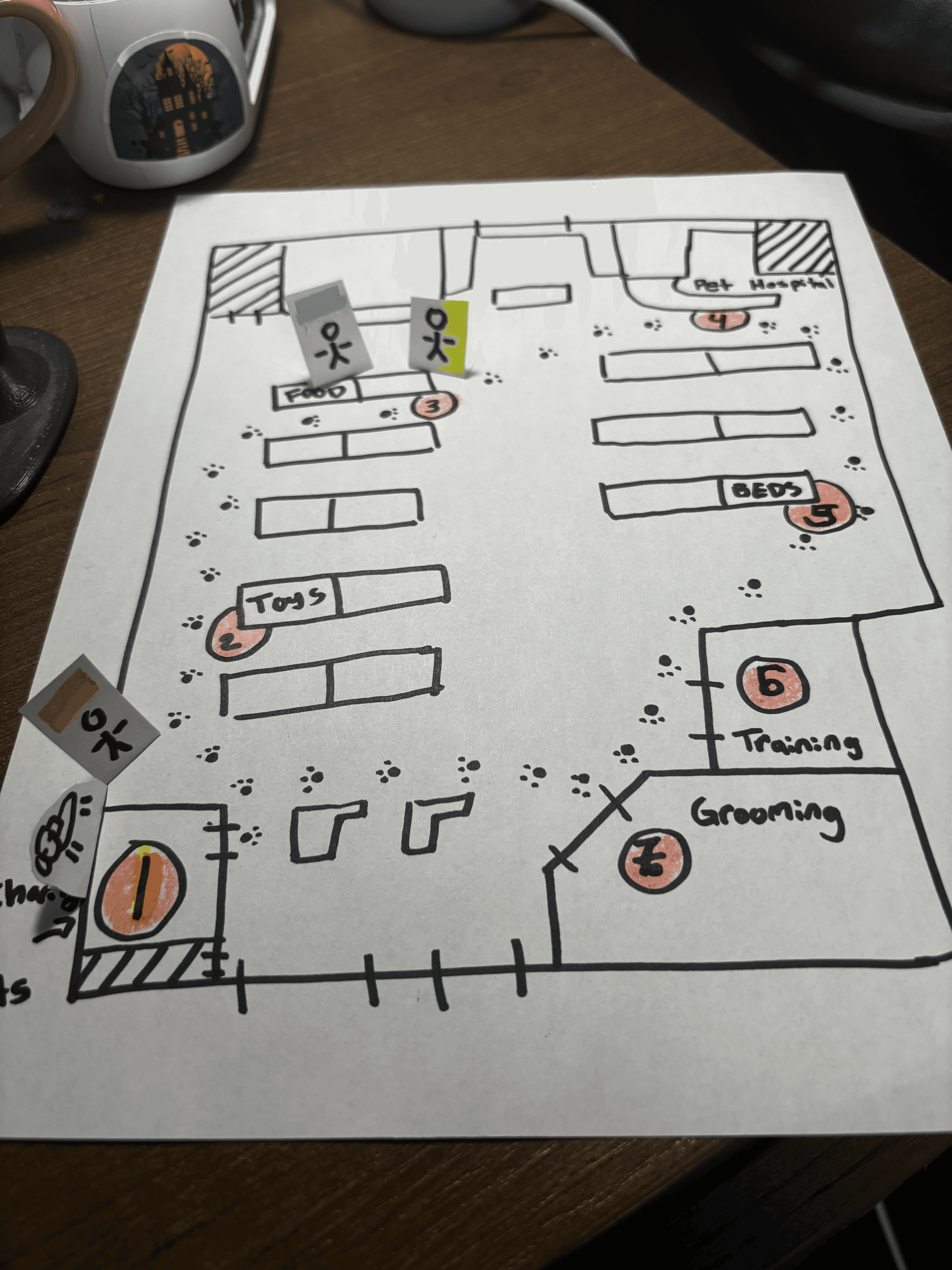
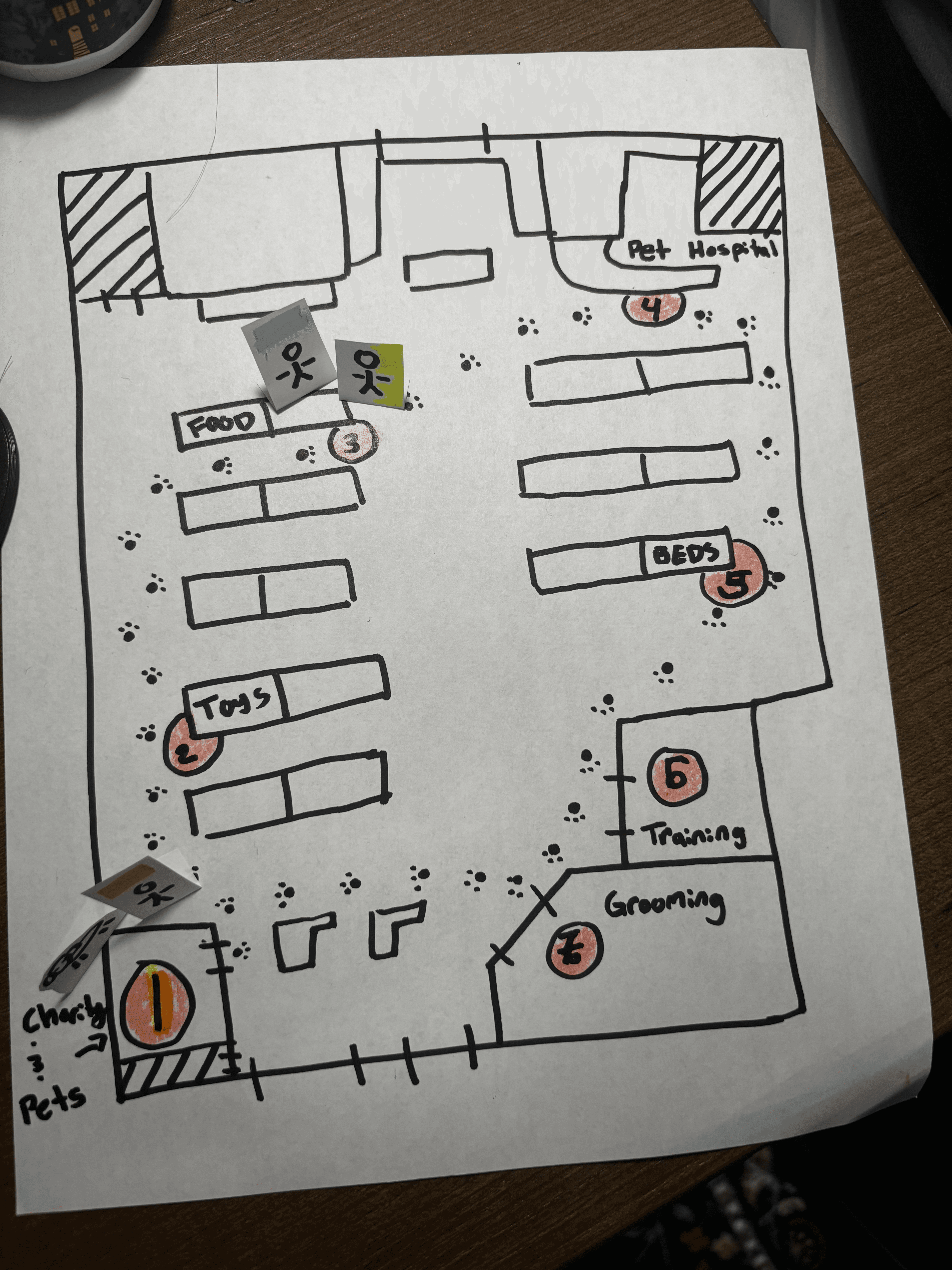
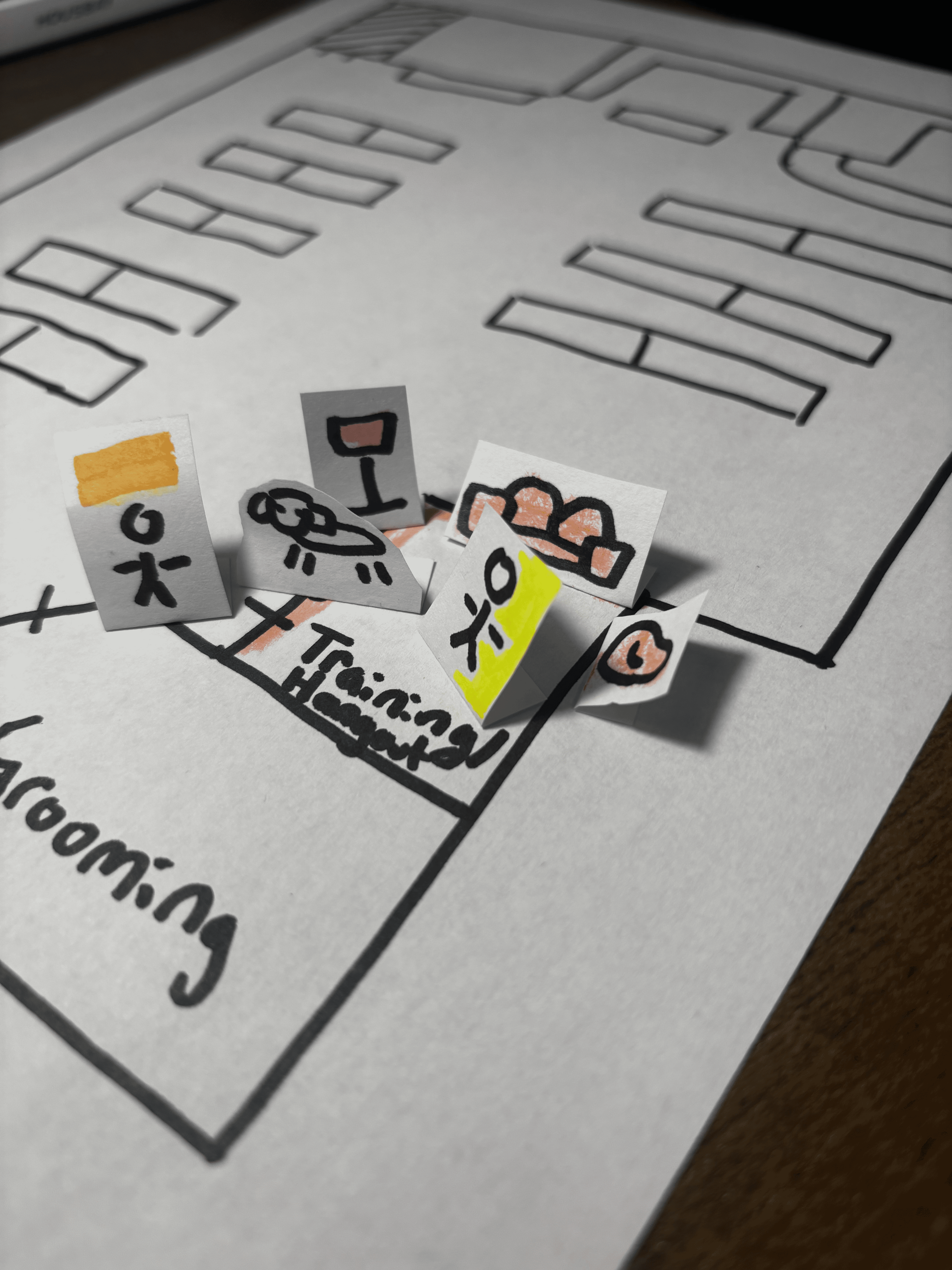
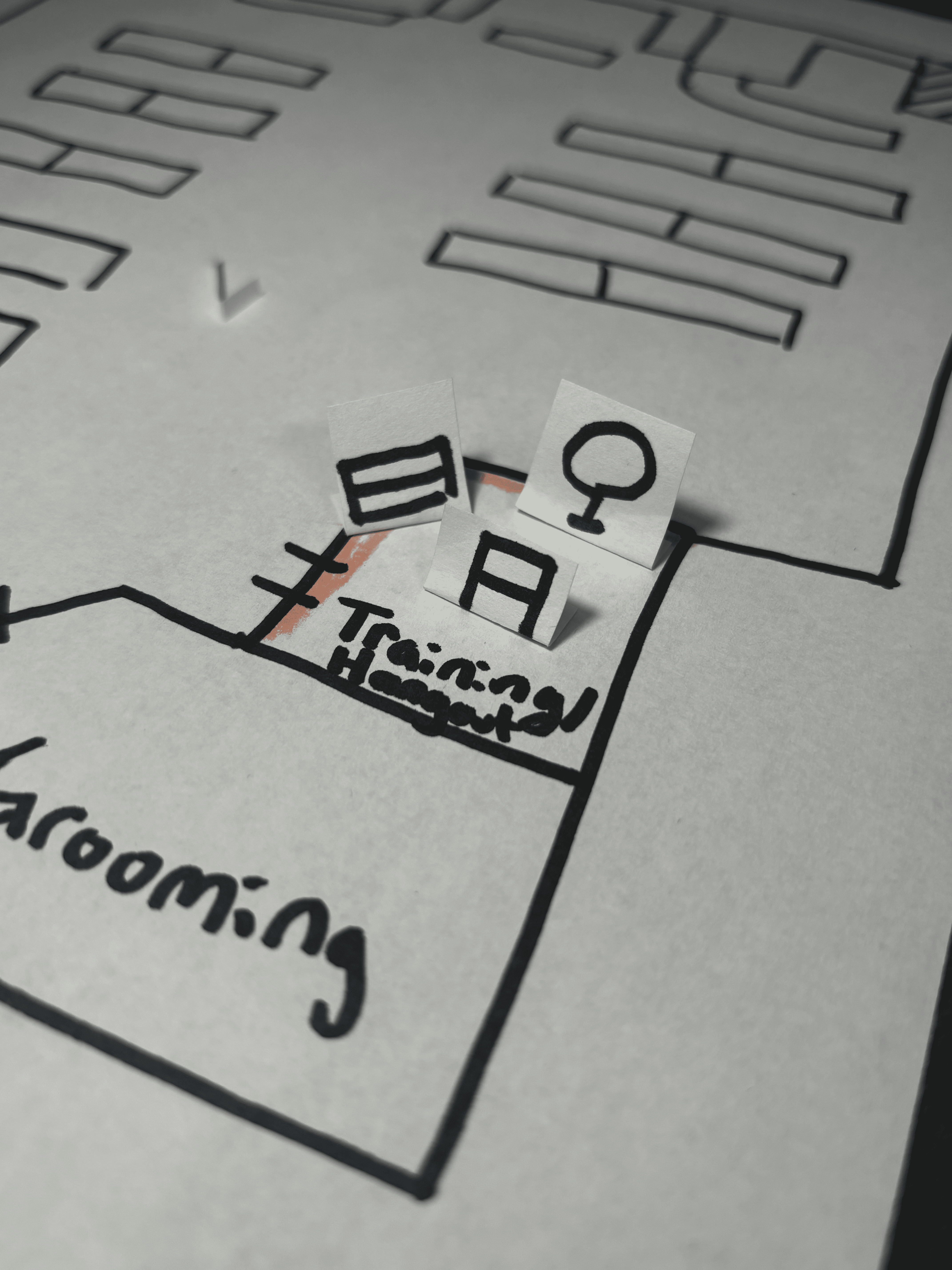

Low Fidelity prototypes made as a proof of concept
New Service Blueprint
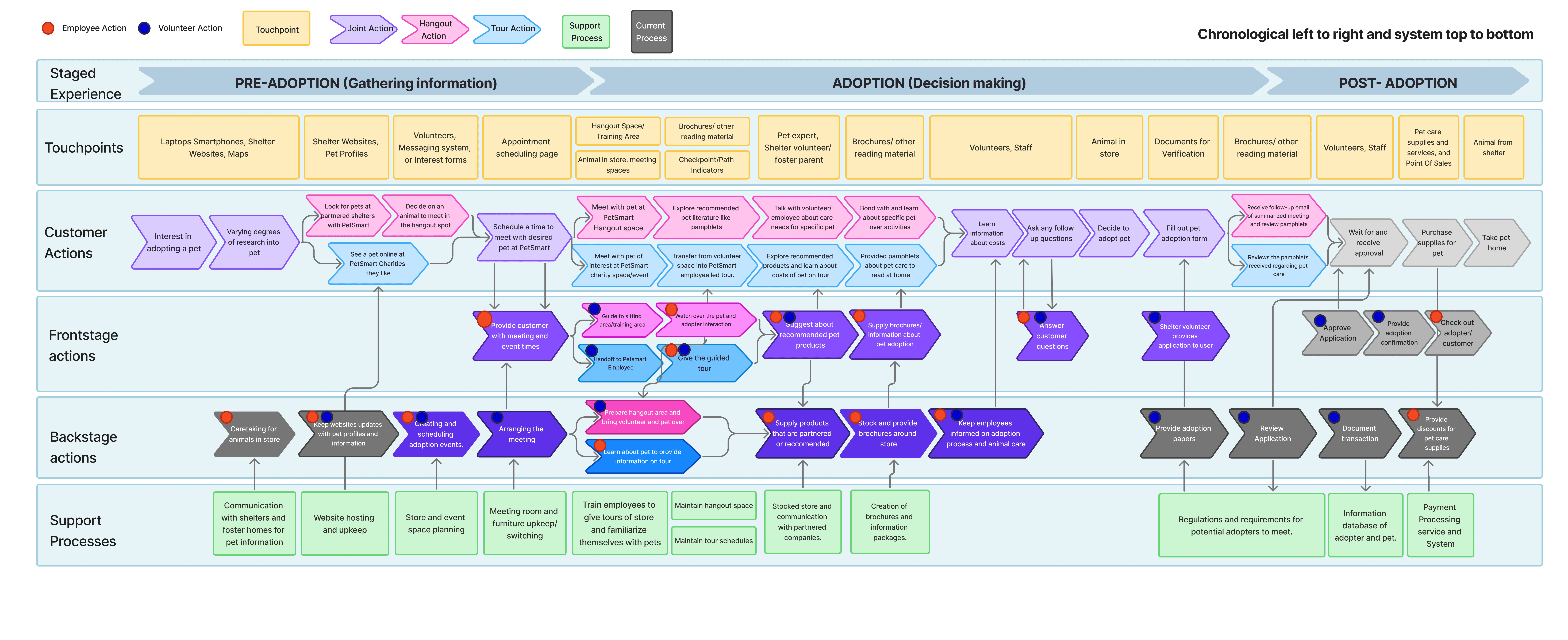
Created after refining the service features in low fidelity prototype
Service Prototypes
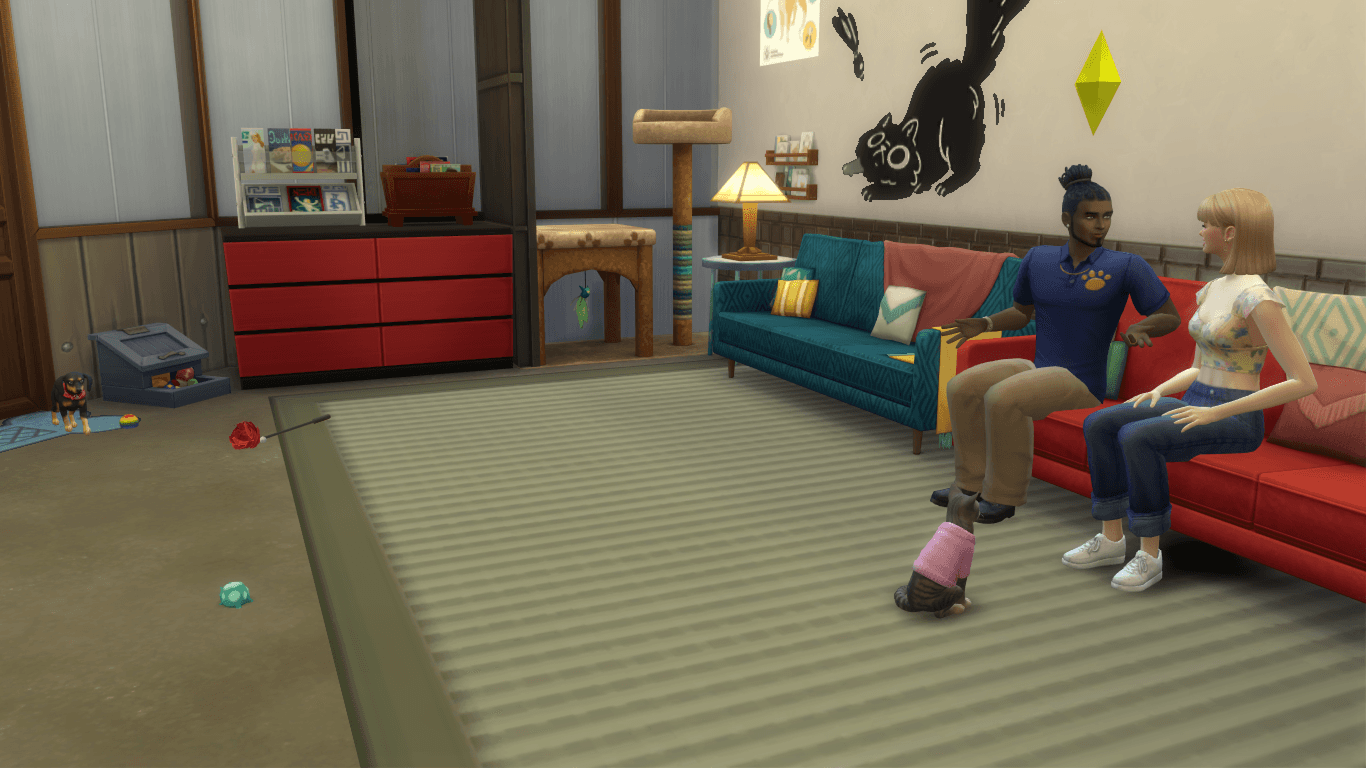
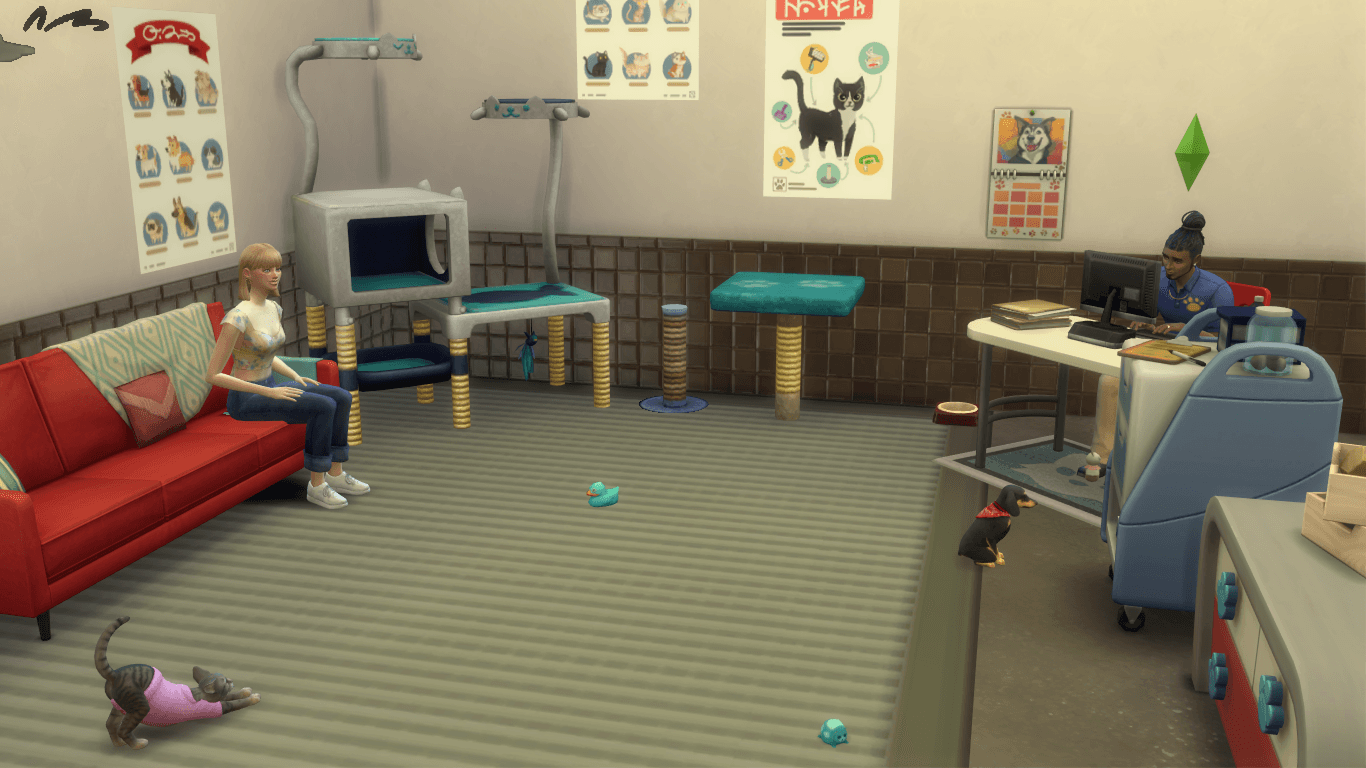
'Pet hangout space' prototyped in Sims
Detailed Sketches
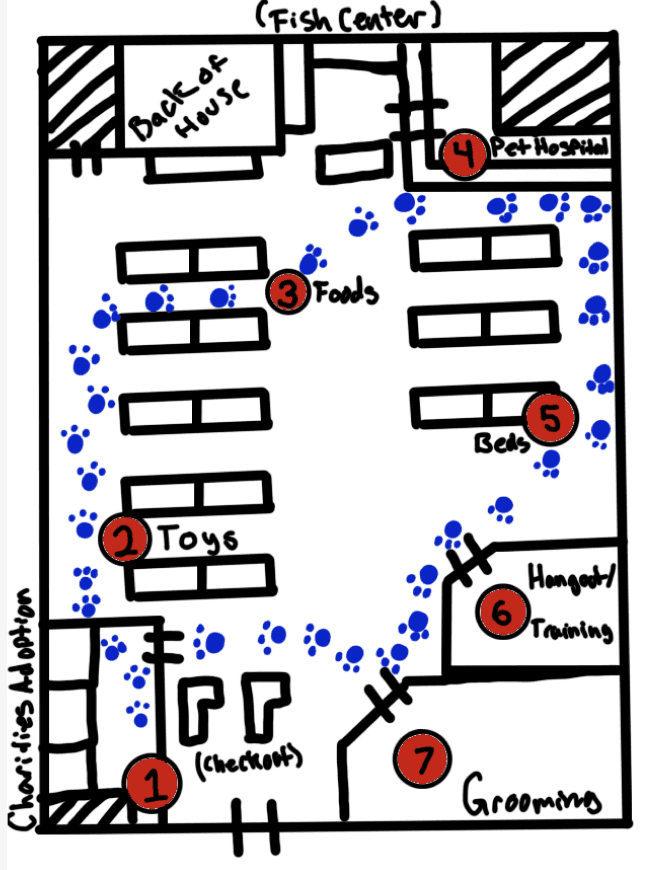
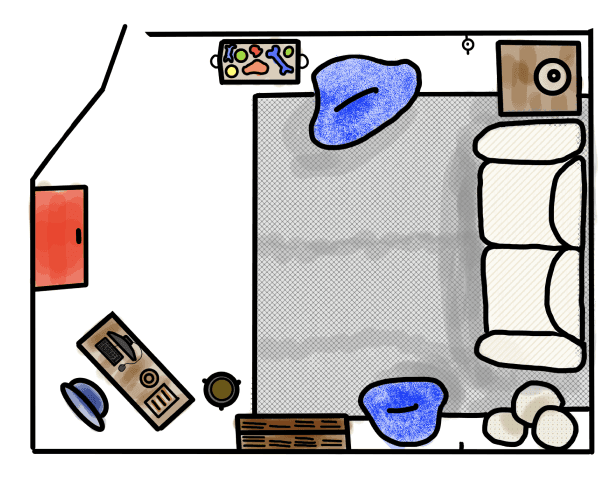
(left) PetSmart tour (right) Pet Hangout space
मी काय शिकलो
What I learned
Spend time to really know your teammates
Before starting the project, I had no idea who my teammates were. Towards the end, we became really close as designers and able to understand each other better. As a co-lead, I ensured my team and I fostered an environment that felt easy to work in. To facilitate this, we worked at a new cafe every week, exploring Savannah in the process.
Presentation is key
While it is important to create thoughtful, comprehensive solutions, I observed that it is even more important to present them well. Oftentimes, our audience followed the presentation better and were more impressed by our solutions than what we had actually created. As a visuals manager, I spent the early days of the project creating an asset library as well as a design language for our team to brand ourselves and keep our work memorable.
Thank you for reading!
तुम्हाला कदाचित हे आवडेल